calls to action, explained: every type on chilli
One call to action per post, six types: email, social comment, Google Maps, phone call, survey and external link. Email is your workhorse, calls hit hardest, comments and reviews go public, surveys warm people up.
A call to action is the one concrete ask inside a post: send this email, make this call, post this comment. Each post on your action carries one, and you get six types, each putting pressure somewhere different. Post the right mix over time and a single action can hit an inbox, a phone line and a CEO's comment section in the same week.
Here's every type, what you set up, what your supporters see, and when to reach for it.
the cheat sheet
| type | you set up | supporter taps | best for |
|---|---|---|---|
| to, subject, body | "send email" | pressure on a named decision-maker | |
| social comment | platform, post link, example comment | "comment on Instagram" (or LinkedIn, X) | public pressure where the target's audience can see it |
| Google Maps | Maps link, example review | "comment on Google Maps" | businesses and places that live on their reputation |
| phone call | phone number, script | "call" | offices that count calls (politicians, local officials) |
| survey | a question and answers | "answer survey" | warming people up, learning what your community thinks |
| external link | the link, a message they can copy | "take action" | petitions, consultations, anything that lives off chilli |
What it is: your supporters send an email you wrote to the person with the power to decide.
What you set up: the "to" address (one or several), a subject and the body. chilli personalises the body for each supporter, "so no two emails are the same". The app also checks addresses and warns you when it "couldn't confirm" one exists, so you can fix it before anyone hits send.
What supporters see: a ready-to-send email, tailored to them. They tap "send email" and it's done.
Use it when: there's a named person with an inbox. Ministers, council members, CEOs, heads of sustainability, journalists. Email is the backbone of most wins on chilli, which is why we recommend at least one in every action.
Tip: write the body as one ordinary person, not an organisation. Keep it to one ask and one hard fact. Polite and firm beats angry and long.
social comment
What it is: your supporters comment on a specific public post, usually the target's own. Picture a company's shiny sustainability post, suddenly full of questions it doesn't want to answer.
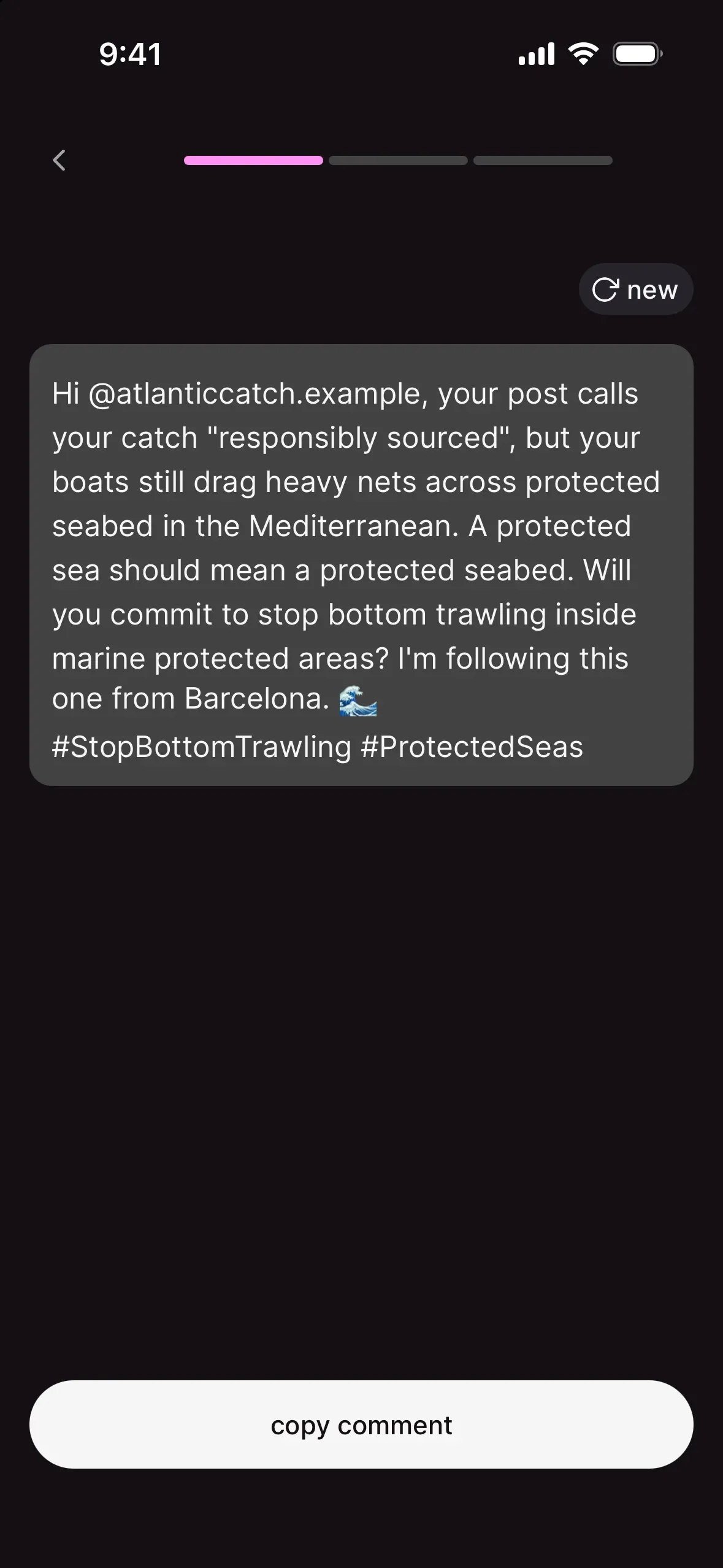
What you set up: pick one platform (the app offers Instagram, LinkedIn or X), paste the link to a public post (not a profile, not a private post) and write an example comment. Hashtags, @mentions and emojis are welcome. Tap see examples to preview how other supporters' versions could look.
What supporters see: their own version of the comment and a button that opens the post.
Use it when: the target cares about how they look. Brands, influencers, investors, public figures.
Tip: keep hashtags and mentions exact, and don't include dates in the comment (they age badly).
Google Maps
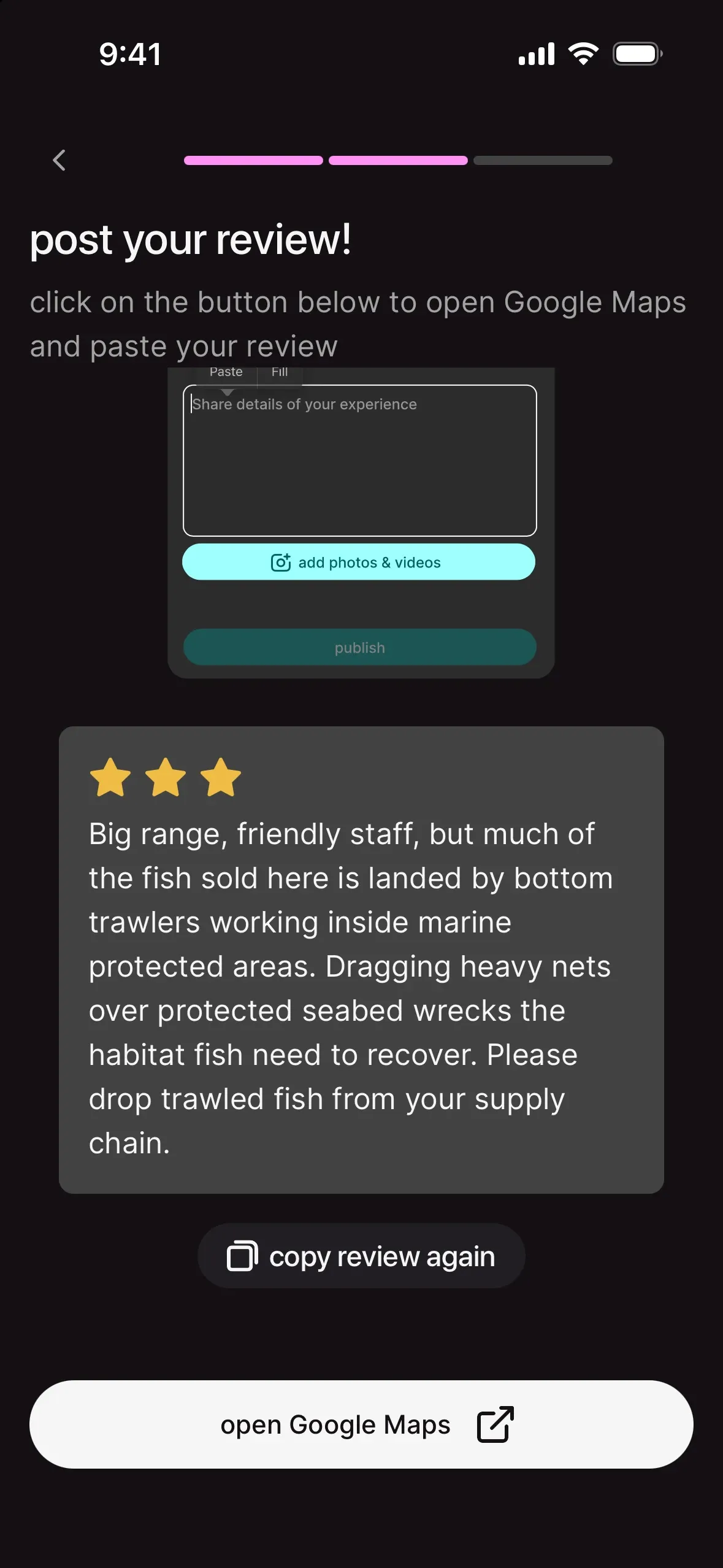
What it is: supporters leave a review on a specific place: a hotel, a restaurant chain, a company HQ, an aquarium.
What you set up: the Google Maps link of the place (find it on Google Maps, tap share, copy the link) and an example review.
What supporters see: a personalised review, copied and ready to paste, plus a button to open the place on Maps.
Use it when: the target depends on walk-in customers or tourists and its star rating is its lifeblood. The Captain Paul Watson Foundation used reviews on businesses linked to Icelandic whaling.
Tip: reviews should be factual and specific. "This company profits from the fin whale hunt" is fair. Personal insults get reviews removed.
phone call
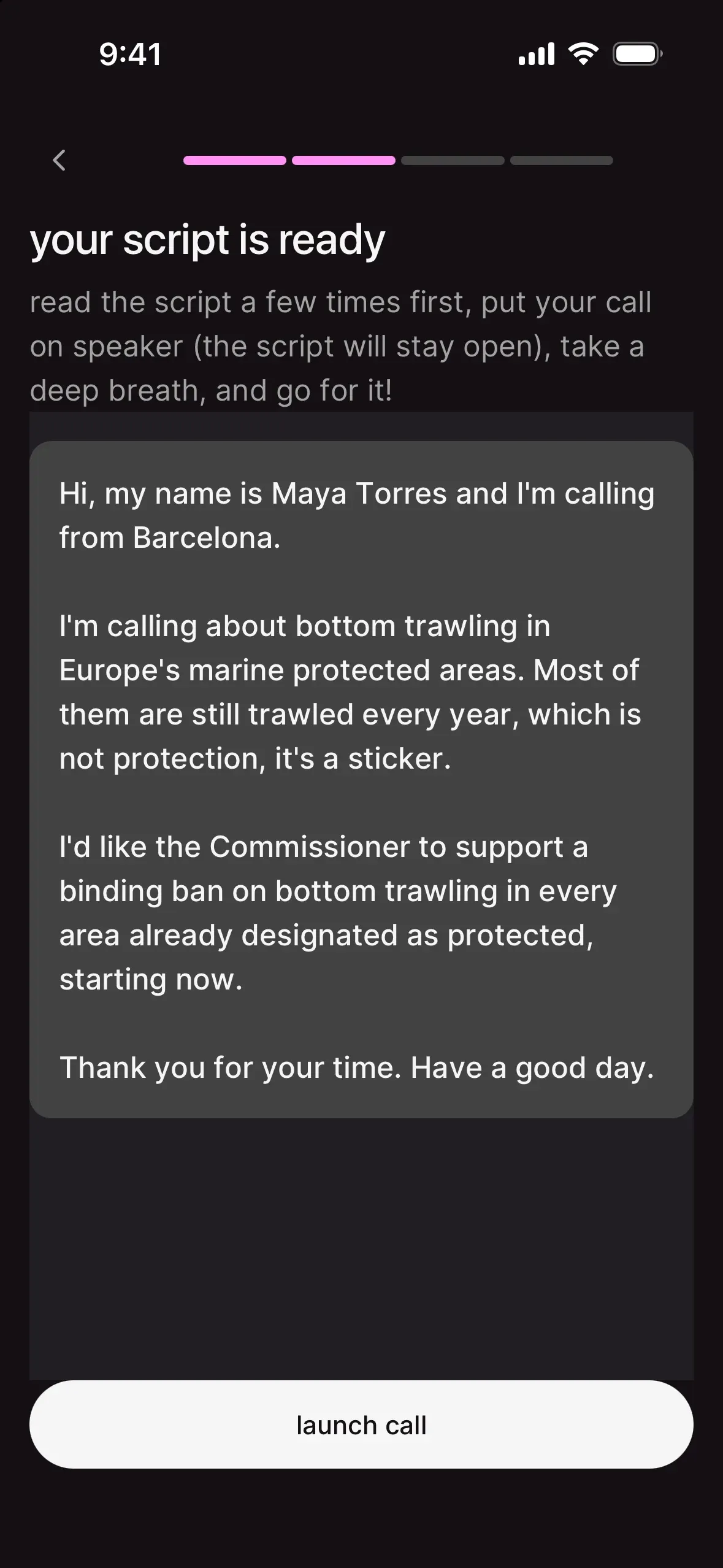
What it is: supporters call a number and read a script you wrote.
What you set up: the phone number, with the country code (+1 917 353 7000), and a script written as if you were the one calling. "Short, polite and firm works best." chilli adapts it to each caller's name and city.
What supporters see: the script, personalised, and a "call" button.
Use it when: you're targeting a political office. Staffers tally calls, and a ringing phone is harder to ignore than a full inbox. EarthlyEducation paired 2K emails with 65 calls to Congress, and CBP paused construction in Big Bend six days after launch.
Tip: a call is the biggest ask on this list. Post an easier call to action before it, and reassure people: "it takes two minutes and you just read the script".
survey
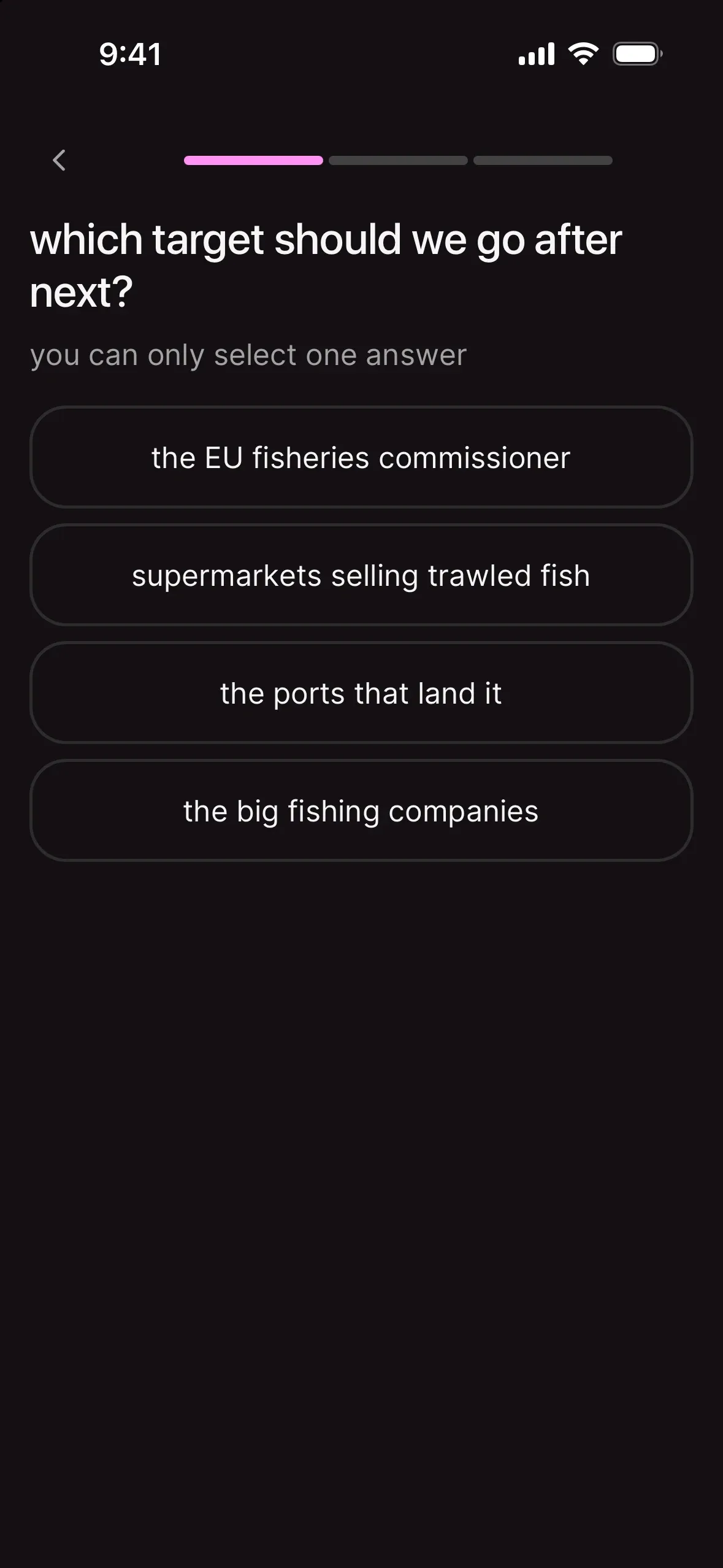
What it is: a question with answers, single choice or multiple choice.
What you set up: your question and at least two answers. Tap add an answer for more, and the bin icon to remove one. Toggle multiple selection if people can pick more than one.
What supporters see: the question, the choices, "answer survey".
Use it when: you want an easy first step (it takes five seconds and gets people moving), or you want to know what your community thinks before your next action. "Which should we go after next: the bank or the insurer?"
Tip: a survey makes a great first post. Pin it to the top while it's the ask you want everyone to see first: it gives people a quick first step before they tackle a longer one.
external link
What it is: a call to action that sends people anywhere on the web: an official petition, a public consultation, a registration page, an article.
What you set up: the link to the page you're sending people to, plus exactly what to do once they get there. If people write something on that page (a petition comment, a consultation answer), add a message they can copy: chilli personalises it for each supporter.
What supporters see: the task, their comment and "take action".
Use it when: the action has to happen somewhere else, like a government consultation where every submission counts. Caroline Gleich's Stratos campaign included public comment filings and voter registration checks, exactly the kind of task that lives off chilli.
Tip: external links break the flow a little, so be crystal clear about what people should do when they get there.
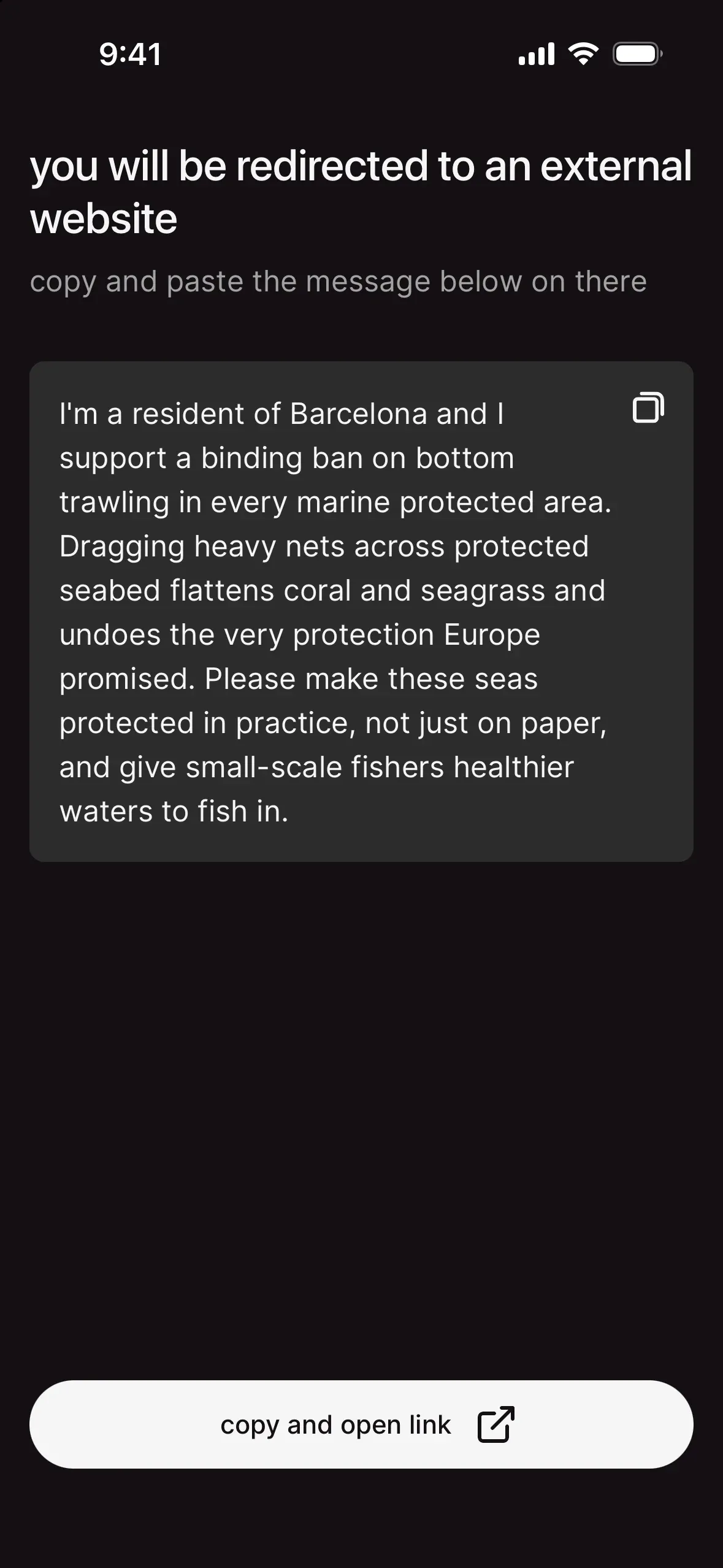
what about donations?
Donating isn't a call to action. It's a separate button: fund my work on your profile ("fund our work" for an organisation), fund @yourname on your action page, plus a fund my work card in your action's feed, after the third post. One-time or monthly, and only once donations are set up for your account. Keep them separate on purpose: lead with action, and let the money follow. Details in set up donations and get funded by your community.
spread them across your posts
One post, one call to action. So the mix happens over time: post several calls to action, each with its own type and its own moment.
- start easy: a survey or a comment.
- hit the core target: an email to the decision-maker.
- turn it up: a call, a review or a comment on the target's own post.
Your feed shows the pinned post first, then the newest. Pin the ask you want everyone to do right now, and let the fresh ones stack up under it.
Caroline Gleich's Stratos campaign used this mix at scale: 10K emails, 221 social comments, public filings and more, across 8 pressure points.


How Caroline Gleich made Stratos a national fight
For more on combining them, read how to design an action people actually complete.
publishing a call to action
A call to action lives in a post, so you publish it from the composer:
- Tap + and pick your action in the create sheet (or tap + on your action page). The composer opens, "posting in" your action.
- Write a line or two: what's happening, and why this ask, now.
- Tap add a call to action. On "what should your supporters do?", pick one of the six types.
- Fill it in: the address and the email, the number and the script, the link... It sits in your post as a card.
- Tap next. On "when should it go live?", tap publish now, or publish later and pick a day and time.
Your action isn't live yet? The "when should it go live?" sheet tells you the post "will go live with it". Nobody sees it until you publish your action.
A post holds one call to action or media (an image, a video, a voice note), never both. Got a photo that tells the story? Give it its own post.
Publishing shows you what's happening: "publishing your post", "adding your call to action", "notifying N supporters". Then:
- published now: "your post is live!". Tap share it to put it in your stories, or done.
- published later: "your post is scheduled". It goes live on the day you picked, and your supporters are notified when it does.
manage your posts
Every post you published has a … menu, and only you see it:
- edit: change the text or the call to action. Once people took part, the call to action can be edited but not removed ("this call to action already has N completions").
- pin to top / unpin: keeps the post at the top of your action, above the newest ones.
- share: shares that post on its own.
- delete: takes the post down for good. If it has a call to action, "its call to action will be archived. people who already took part stay counted."
Scheduled posts get edit, reschedule and delete. You can pin one once it's live.
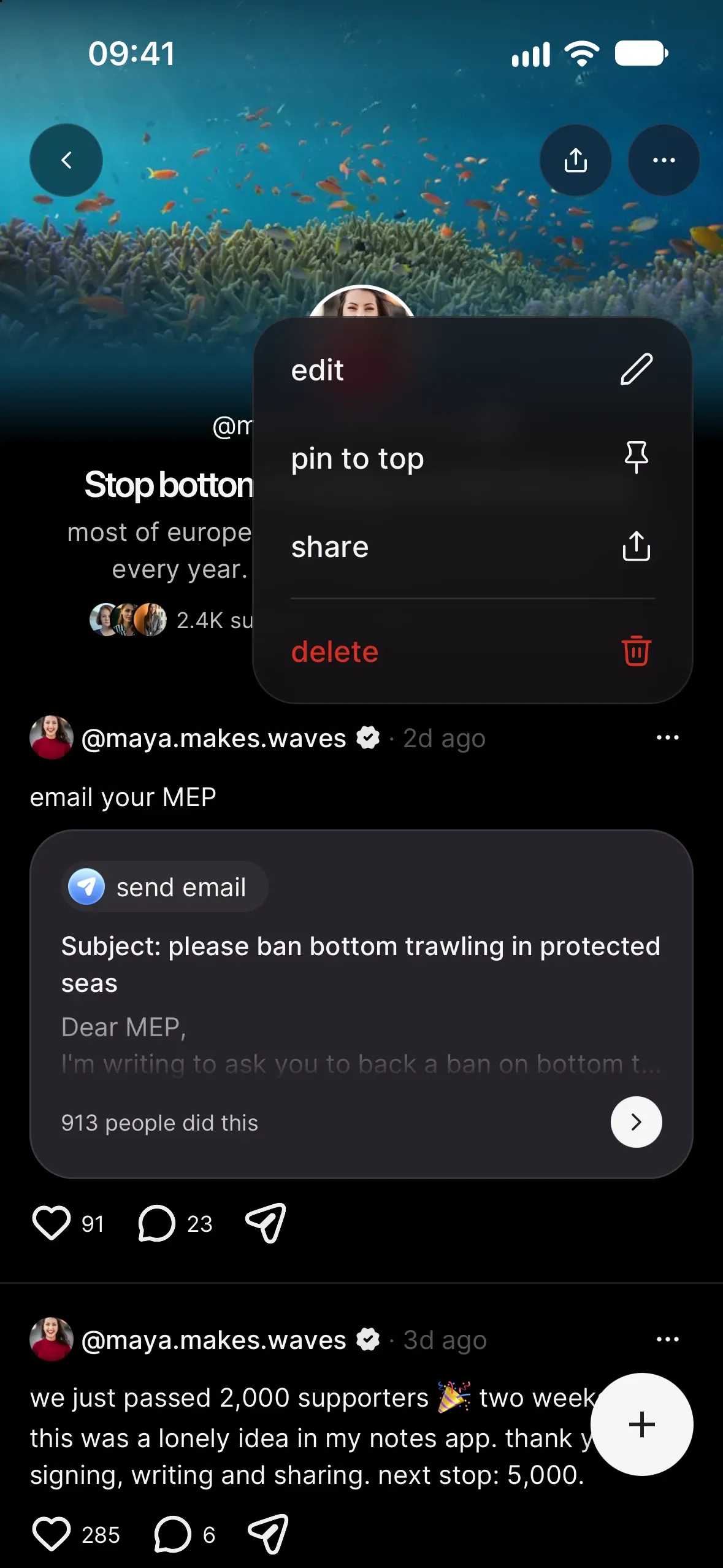
Done with an ask (the vote happened, the consultation closed)? Delete its post. Everyone who took part stays counted, and your feed stays about what matters now.
Sometimes the chilli team prepares posts with a call to action for you, ready to check and publish. Here's how that works: review what the chilli team prepared for you.
your next move
You've got the tools. Now write a title that makes people tap: the CTA formula: how to write an action title people can't ignore.